

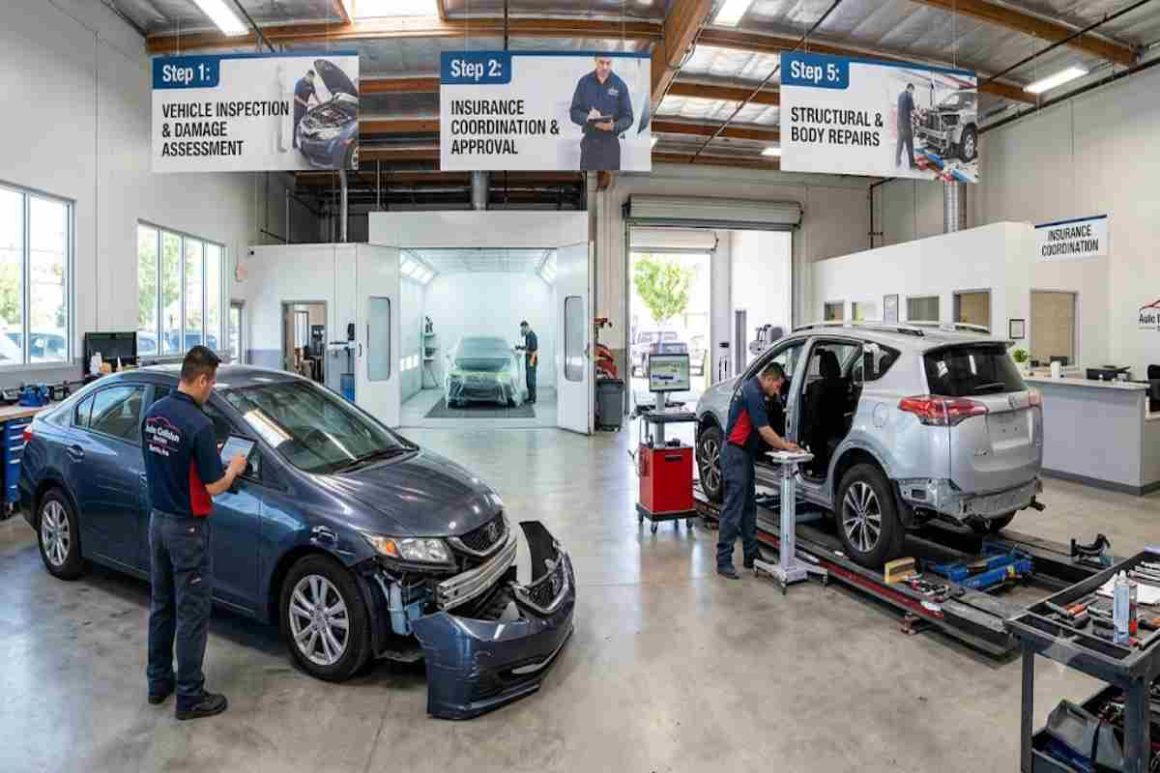
After an accident, getting your car repaired can feel overwhelming. This can be particularly true if it’s your first time dealing with a collision repair shop. Knowing what to expect throughout the process can help ease concerns and keep everything running smoothly. While each repair shop may have its own specific workflow, most follow a general timeline that takes your vehicle from damaged to fully restored. Here’s what you can anticipate when you bring your car in for collision repairs.
Table of Contents
Step 1: Vehicle Inspection and Damage Assessment
The first step in the repair process is a thorough inspection of your vehicle to assess visible and underlying damage. Technicians will document the affected areas and determine the extent of repairs needed. This step may include disassembling certain parts of the car to uncover hidden structural damage that isn’t immediately noticeable. At this stage, the repair shop will provide an initial estimate that outlines the projected costs and time frame for the repair.
Keeping up with routine maintenance can also help you identify potential problems before they become more serious. Following these practical tips to keep your car in great condition can help protect your vehicle and reduce the risk of avoidable repairs. Auto Collision Group in Santa Ana works with all insurance companies to streamline the process, so you can rest assured that all repairs will be coordinated and approved efficiently.
Step 2: Insurance Coordination and Approval
If you’re going through your insurance company, the repair shop will communicate directly with them to confirm coverage, discuss repair costs, and get approval for the necessary work. This step may involve sending photos, damage reports, and repair plans to the insurance provider. Once approval is received, the shop can begin ordering parts and scheduling the repairs.
Depending on the circumstances, having an alternative way to travel while your vehicle is being repaired can be convenient. For readers interested in recreational electric transportation, an off-road electric bike can provide another option for getting around away from traditional road vehicles.
Step 3: Disassembly and Additional Assessment
In some cases, further disassembly of your vehicle is needed to identify hidden damage. Modern vehicles have complex safety and structural systems that may be affected in even the smallest of accidents. During this stage, technicians will verify that all necessary repairs are accounted for before moving forward. If additional issues are discovered, the shop may need to submit a supplement to the insurance provider for additional repair authorization. While this can extend the timeline slightly, it’s essential because it means that no damage is left unaddressed.
Step 4: Parts Ordering and Repair Planning
Once the full scope of repairs is determined, the necessary replacement parts are ordered. Some components may be readily available, while others – especially manufacturer-specific or custom-painted parts – might take longer to arrive.
The type of vehicle and powertrain can also influence the parts and components required during repairs. For additional information about one common vehicle powertrain, you can learn more about diesel engines and how they differ from other engine types. During this time, the shop will create a detailed repair plan to keep all steps moving forward efficiently.
Step 5: Structural and Body Repairs
With the parts in hand, technicians begin the actual repair process. This often includes frame straightening, dent removal, and panel replacements. Advanced equipment and computerized measuring systems promise precision and restore the car to its original structural integrity.
For more guidance on choosing a reliable repair shop and understanding your rights as a consumer, the Federal Trade Commission offers helpful insights. Staying well-informed can make all the difference when navigating collision repairs.
Step 6: Paint Matching and Refinishing
Once bodywork is completed, your vehicle moves to the paint department. Technicians use computerized color-matching technology to seamlessly blend the new paint with the existing finish. The process includes priming, painting, and clear coating to protect the surface and give your car a flawless, factory-quality finish.
Step 7: Reassembly and Final Inspection
After painting, technicians will reassemble all parts, including trim, lights, and interior components. At this stage, they will also test safety systems, sensors, and electronics to confirm that everything is functioning properly. Before returning the vehicle to you, the shop will conduct a thorough quality control inspection. They will check for any imperfections, verify alignment, and ensure the repairs meet industry standards.
Step 8: Cleaning and Final Touches
Most reputable auto body shops will provide a final cleaning, including vacuuming the interior and washing the exterior. Professional detailing can go beyond the basic cleaning performed after a repair, helping restore the vehicle’s interior and exterior appearance. For those interested in the industry itself, these tips for starting a car detailing business provide useful insights into running a detailing service. Your car should be returned to you in pristine condition, free of dust and debris from the repair process.
Step 9: Vehicle Pickup and Review
Once repairs are complete, you’ll be invited to pick up your vehicle. The shop should walk you through the work performed, explain any warranty coverage (if applicable), and provide documentation for your records. If you have any questions or concerns, this is the time to address them before driving away.
While vehicle repairs address the physical damage to your car, it is also important to pay attention to your own well-being after a collision. If you experience discomfort or injuries after an accident, learning how to choose the right chiropractor after a car accident may help you understand your options for seeking appropriate care.
If your vehicle is unavailable while repairs are being completed, alternative forms of transportation can also be useful for short-distance travel. The growing popularity of e-bikes in the Swiss cycling world highlights how electric-assisted cycling is becoming an increasingly practical transportation option.
Trust Your Car with Experts Who Care
Navigating collision repairs doesn’t have to be stressful when you choose the right auto body shop. Auto Collision Group in Santa Ana takes the hassle out of the process by working with all insurance companies, providing expert craftsmanship, and restoring your car to its pre-accident condition. If you need professional auto body repairs, trust the team that prioritizes quality, precision, and customer satisfaction. Contact Auto Collision Group today to get your car back on the road with confidence!