

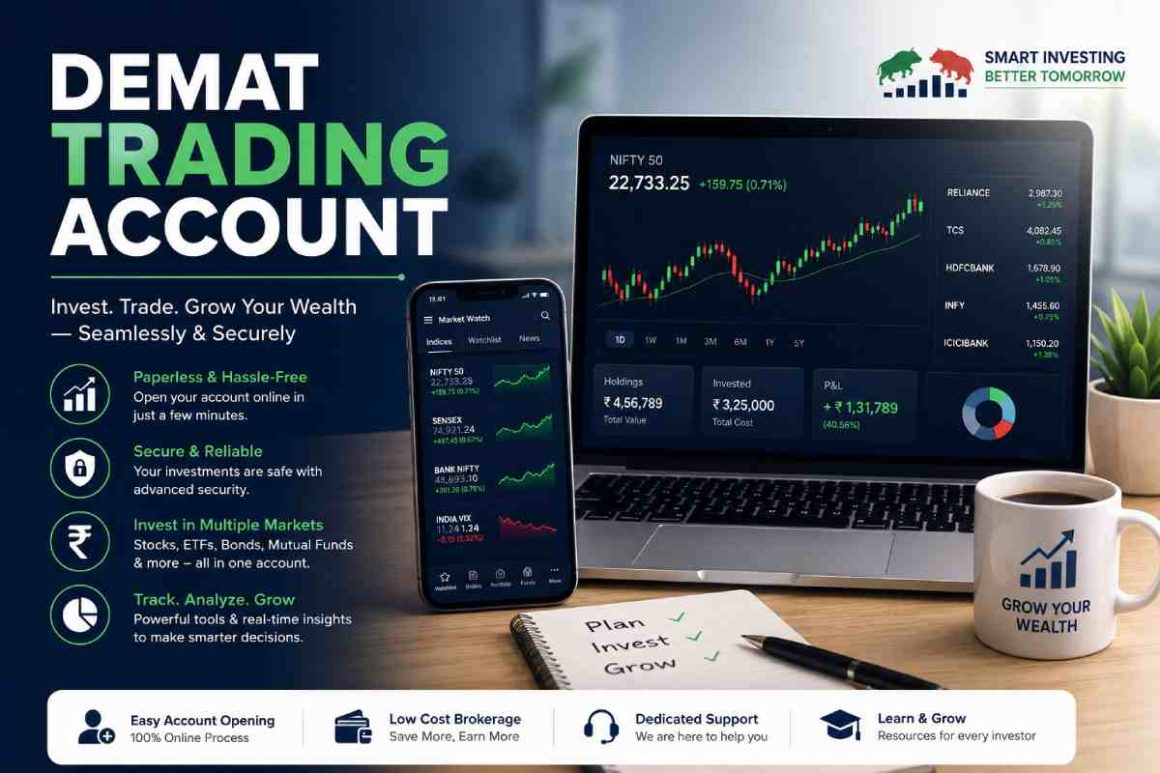
A Demat trading account helps investors hold securities electronically and place transactions in financial markets. Mobile apps have made many account-related tasks easier for investors to manage their investments. A broking app brings holdings, orders, transactions, and account details together on one platform.
Digital platforms help people access important information and manage everyday tasks more efficiently, whether they are handling investments or professional communication. For employees who need convenient access to workplace email, this guide to Sun Pharma webmail explains the login process, mobile access, and essential account security practices.
Investors can access important information without relying on physical statements or visiting branches regularly. They can check holdings, review transactions, and monitor account activity whenever required. However, easy access does not replace careful decisions or the need for proper account security.
Table of Contents
What is a Demat Trading Account?
A Demat account holds shares and other eligible securities in electronic form. It replaces the need to keep physical share certificates for listed securities safely. A trading account is used to place buy and sell orders through markets. Both accounts work together when investors purchase or sell eligible securities through registered brokers. After a purchase, the securities are generally credited to the investor’s Demat account. When securities are old, the corresponding holdings are debited through the settlement process.
How to Manage a Demat Account
Here are some ways to properly manage your Demat account.
Checking Holdings Through a Broking App
A broking app gives investors quick access to securities held within their Demat account.
Mobile technology has made it easier for people to access digital tools and important information wherever their daily responsibilities take them. The rise of mobile professionals explores how portable devices and flexible work arrangements are changing the way people stay connected and manage tasks across different locations.
The holdings section usually shows the investments currently available in the investor’s
account.
Depending on the platform, users may see quantities, purchase values, and current
market values. These details help investors get a quick view of their existing investment
position.
Checking holdings regularly can help investors stay aware of changes across their
portfolio. However, daily price movements should not automatically lead to buying or
selling decisions.
Monitoring Orders and Transactions
Investors can use a broking app to check the status of market orders. An order may appear
pending, completed, rejected, cancelled, or partially executed.
This helps investors understand what happened after placing a buy or sell request. Order
history may also show records of transactions completed through the trading account.
Users can review details such as quantities, prices, and transaction dates where available.
Checking these records can help investors spot mistakes and understand past
transactions better.
Managing Funds and Account Information
A broking app may allow investors to check available funds linked with transactions.
Depending on available features, users may add funds or request withdrawals through
supported processes.
Before placing an order, investors should understand the amount required for the
transaction. Brokerage, taxes, and other applicable charges may affect the final amount
payable.
Account details may also be available through the application for easier access. Investors
should update registered information whenever changes are required under applicable
account procedures.
Tracking Portfolio Performance
A broking app may show the combined value of investments held by an investor. This helps
users see how different securities contribute to their overall portfolio value.
Some apps may also show individual holdings, transaction records, and changes in market
value. Investors can use this information while reviewing their investments against their
original financial goals.
Short-term changes in portfolio value do not always require immediate action from
investors. Prices may move because of company developments, market conditions, or
broader economic events.
Accessing Market Information
Many broking apps provide market prices and basic information about listed companies.
Access to timely information is becoming increasingly important across digital platforms, especially when users need to follow changing conditions. The shift from broadcast to live data explores how real-time updates are changing the way audiences receive information and interact with digital services.
Investors may use these details when researching securities or monitoring their existing
holdings.
Watchlists may also help users follow selected securities without searching for them
repeatedly. This feature can be useful when investors want to monitor several companies
regularly.
Market prices alone do not provide enough information for every investment decision.
Investors should also review company information, financial results, and relevant risks
before investing.
Short-term market activity may look important but does not explain every price movement.
Research can help investors understand the factors that may affect a particular
investment.
Managing Corporate Actions
Companies may announce corporate actions that affect shareholders and their existing
holdings. These may include dividends, bonus issues, stock splits, or rights issues for
eligible shareholders.
A Demat trading account holds eligible securities electronically when these corporate
actions take place. The treatment depends on the company’s terms and the applicable
process for each action.
Investors should check company announcements and understand important dates before
taking necessary action. Official information should be reviewed carefully whenever a
corporate action requires an investor response.
A broking app may provide notifications or account information related to certain
corporate actions. Investors should still remain aware of deadlines and requirements
associated with their holdings.
Conclusion
Managing a Demat trading account through an app can simplify many everyday investment
activities. Investors can check holdings, monitor orders, review transactions, and access
account details conveniently. A broking app may also help users follow market information
and manage investments digitally. However, careful research, strong account security,
and clear financial goals remain equally important. 5paisa may provide digital tools for
managing investments and market-related account activities.