

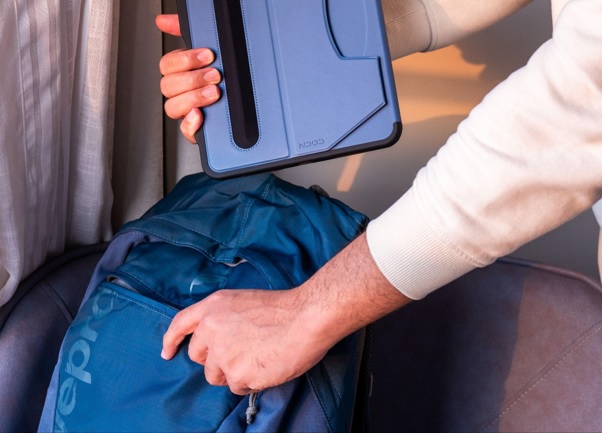
For decades, professional work was tied to a desk. If you wanted to write reports, attend meetings, edit presentations, review documents, or communicate with clients, you needed a dedicated office space filled with equipment.
That reality has changed dramatically.
Today, a growing number of professionals can carry their entire office in a single backpack. Whether they’re working from coffee shops, airport lounges, client sites, co-working spaces, hotels, or simply moving between rooms at home, modern workers increasingly prioritize flexibility over fixed workstations.
The shift isn’t just about remote work. It’s about mobility. Professionals want technology that travels with them without compromising productivity.
The challenge is creating a setup that remains practical, comfortable, and efficient wherever work happens.
Table of Contents
Why Mobile Working Has Become the New Normal
Remote and hybrid working models have become standard across many industries. At the same time, advances in cloud software, collaboration tools, and mobile hardware have made location less important than ever.
A graphic designer can edit client projects on a train journey. A consultant can review presentations from an airport terminal. A student can move seamlessly between lectures, libraries, and home study sessions.
What matters isn’t where work happens. It’s about whether your tools let you work effectively wherever you are.
As a result, professionals are becoming increasingly selective about what earns a place in their bags.
Every item needs to justify its weight, size, and purpose.
The Modern Mobile Office Checklist
Creating a portable workspace doesn’t mean carrying less technology. It means carrying smarter technology.
Most mobile professionals now build their setups around a few core essentials.
A Powerful Primary Device
The centerpiece of any portable office is the main computing device.
For some users, that’s an ultralight laptop. For others, increasingly, it’s an iPad.
Modern tablets have evolved far beyond media consumption devices. With desktop-class processors, advanced multitasking features, professional creative software, cloud integration, and support for external displays, many professionals can comfortably perform their daily tasks using a tablet-first workflow.
The advantage is obvious: reduced weight, improved battery life, instant startup, and greater flexibility when working in confined spaces such as airplanes or cafés.
Reliable Connectivity
A portable office is only as useful as its internet connection.
Many mobile workers carry a backup connectivity solution, whether that’s mobile tethering, a dedicated hotspot, or public Wi-Fi access when appropriate.
Cloud-based platforms such as project management tools, document collaboration suites, CRM systems, and communication apps have made connectivity the backbone of modern productivity.
Without a connection, many workflows simply stop.
Portable Power
Battery anxiety remains one of the biggest concerns for professionals who spend long periods away from traditional workspaces.
A high-capacity power bank can provide reassurance during travel days, conferences, or extended client meetings.
Many professionals now prioritize devices with exceptional battery efficiency specifically to minimize the number of chargers and cables they need to carry.
Audio Equipment
Video calls have become a routine part of professional life.
Whether attending team meetings, interviewing candidates, collaborating with clients, or participating in virtual events, clear audio is essential.
Quality wireless earbuds or compact noise-canceling headphones can dramatically improve communication quality while helping users focus in noisy environments.
Ergonomics: The Most Overlooked Part of Mobile Productivity
Many people spend significant time researching processors, storage capacity, and battery performance while overlooking a factor that affects productivity every day: ergonomics.
Working from different locations often means adapting to less-than-ideal environments.
Coffee shop tables may be too low. Hotel desks may be poorly positioned. Airport seating rarely prioritizes comfort. Even kitchen tables can become uncomfortable during long work sessions.
Over time, poor posture contributes to neck strain, shoulder discomfort, headaches, and reduced concentration.
The solution isn’t necessarily carrying bulky ergonomic equipment. It’s ensuring your primary device can adapt to different situations.
For tablet users, adjustable viewing angles become particularly important. The ability to quickly switch between typing, reading, presenting, video conferencing, or note-taking positions can make a substantial difference to comfort during long working sessions.
This is why many professionals invest in high-quality cases that function as stable, adjustable stands rather than relying on basic folio covers. For example, a premium iPad case such as the ZUGU case provides multiple secure viewing positions, allowing users to create a more comfortable workstation almost anywhere without carrying additional accessories.
Small ergonomic improvements often deliver surprisingly large productivity benefits over time.
The Rise of the Backpack Office
One noticeable trend among modern professionals is the emergence of highly refined backpack-based workstations.
Rather than carrying numerous specialized devices, many workers focus on versatility.
A typical setup might include:
- An iPad or a lightweight laptop
- Wireless earbuds
- Portable charger
- Compact keyboard
- Smartphone
- USB-C hub
- Charging cable
- Notebook
- Water bottle.
Everything fits comfortably into a single backpack while supporting a full day’s work.
This approach offers obvious practical advantages.
Traveling becomes easier. Commuting becomes less stressful. Workspace flexibility increases dramatically.
Instead of planning their day around access to a permanent desk, professionals can simply work wherever opportunities arise.
Why Tablets Are Becoming Serious Work Tools
The rise of mobile professionals has coincided with significant improvements in tablet capabilities.
For years, tablets occupied an awkward middle ground between smartphones and laptops. They were excellent for media consumption but often struggled with complex productivity tasks.
That gap has narrowed considerably.
Modern tablets offer:
- Desktop-class performance
- Professional creative applications
- External display support
- Advanced multitasking
- Cloud-based workflows
- High-quality cameras
- Exceptional battery life
- Pencil support for handwritten notes and design work.
For writers, marketers, consultants, students, architects, sales professionals, and many creative workers, tablets can now handle the majority of everyday tasks.
The result is a device category that aligns perfectly with the needs of highly mobile professionals.
Security Matters More than Ever
Mobility introduces challenges beyond productivity. Working from public locations increases exposure to potential security risks.
Professionals should consider:
- Using strong passwords and biometric authentication
- Enabling device encryption
- Using secure VPN connections where appropriate
- Keeping software updated
- Avoiding sensitive work on unsecured public networks
- Maintaining regular backups.
Physical protection is equally important.
When your office travels everywhere with you, devices are exposed to a greater risk of accidental drops, impacts, spills, and transport-related wear.
Investing in durable protective accessories can significantly extend device lifespan and reduce the likelihood of costly repairs or downtime.
The Future of Work Is Flexible
The traditional office is unlikely to disappear completely. Many organizations continue to benefit from physical collaboration spaces.
However, flexibility is increasingly becoming the defining characteristic of modern professional life.
Workers want the freedom to choose where they work best.
Some days that may mean a dedicated office. Other days it might be a co-working space, a train journey, a coffee shop, or a hotel room on the other side of the world.
The professionals who thrive in this environment are often those who build systems designed around mobility rather than permanence.
By focusing on versatile devices, efficient accessories, reliable connectivity, and comfortable ergonomics, it’s possible to create a highly productive office that fits comfortably inside a backpack.
And for a growing number of professionals, that freedom is proving far more valuable than the corner office ever was.