

In a business-to-business operation, a delivery is rarely just a delivery. The consignment is usually holding something else up: an engineer on a client site, a production run, a patient appointment, a filing deadline. So the question is not whether a parcel could arrive faster, but whether anything downstream is actually waiting on it.
Standard shipping and same-day courier services solve different problems, and treating them as rival suppliers is where the decision usually goes wrong. Businesses that plan for urgency rather than react to it tend to keep both open: a standard carrier for volume, and same-day courier services like Gophr for the jobs that cannot wait.
Table of Contents
Two models built for different jobs
Standard shipping is a consolidation network. Parcels are collected, sorted at a hub, trunked overnight and delivered on a planned route the following day or later. The economics come from density: your consignment is one of many thousands on a van that was going out regardless. That is what makes the model so efficient at volume, and it is also why the timeline belongs to the network rather than to you.
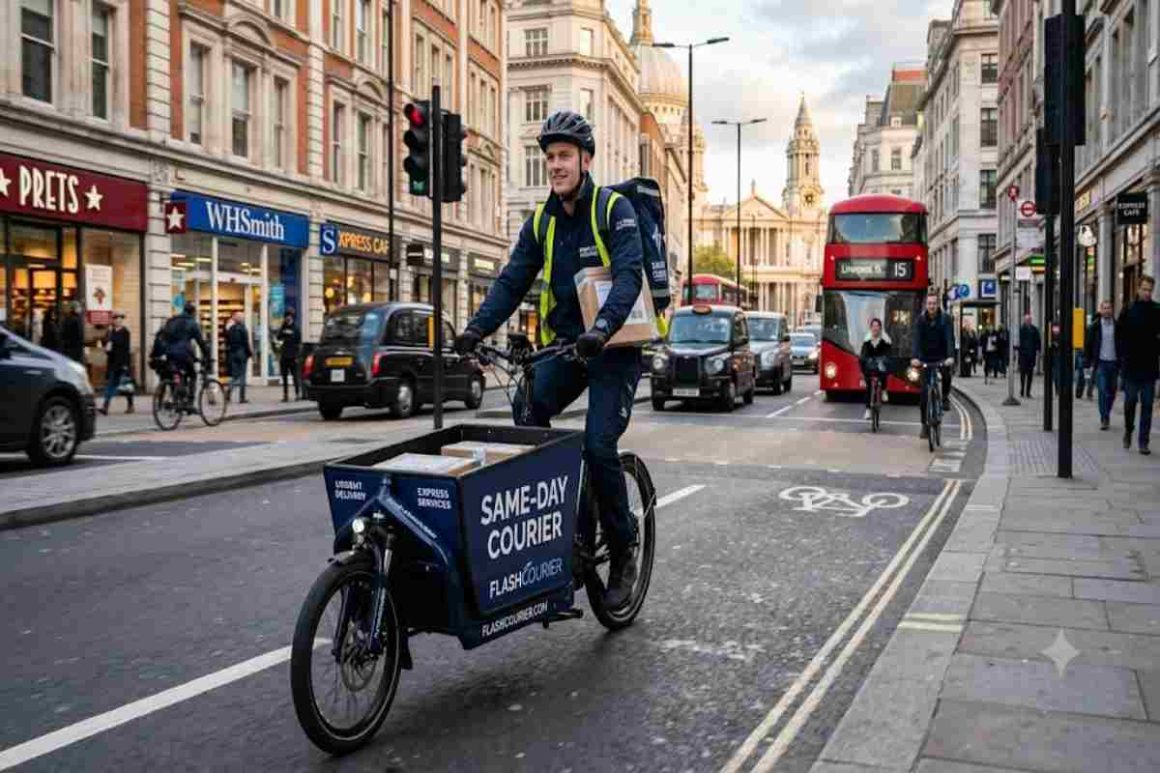
A same-day courier works point to point. A rider or driver collects from one address and takes the item to another, often with nothing else on board. There is no hub, no sort, no overnight leg. You are buying dedicated capacity and a specific window, which removes almost every variable in between.
The real difference is control. One model gives you a published service level and gets on with it; the other gives you a delivery you can influence hour by hour.
- Standard shipping: fixed cut-offs, hub sorting, typically one to three working days, priced for volume
- Same-day courier: direct collection, hours rather than days, live visibility, dedicated to your job
Where standard shipping still makes sense
Standard shipping is the right answer whenever the deadline is known in advance, and there is slack in it. That covers a large share of most delivery volume: replenishment, scheduled dispatch, anything ordered against a lead time the recipient has already accepted. If the arrival date was agreed when the order was placed, and nothing downstream depends on it landing sooner, speed buys you nothing you can use.
The clearest cases for keeping a consignment on a standard network:
- Scheduled stock transfers between sites or into a fulfilment centre
- Bulk or heavy loads where weight breaks favour freight and pallet networks
- Orders with a long lead time already built into the promise, such as made-to-order goods
- Routine, repeat deliveries where the recipient works to a known delivery day
Predictability counts for something too. Established carriers publish cut-off times, handle returns at scale and absorb seasonal volume that would otherwise need managing job by job. Routing routine volume through a dedicated courier model puts a decision in front of somebody for every consignment, which is precisely the work a consolidation network exists to remove.
Where same day delivery pays for itself
The case for same-day delivery is rarely about impatience. It is about the cost of the alternative. An engineer standing idle on a client site, a line down for want of one component, a workshop bay earning nothing: each of those costs more per hour than the delivery does in total. That comparison, rather than the headline price, is the one worth making.
Visibility does work of its own in a B2B chain, because the person waiting is usually not the person who placed the order. Same-day delivery couriers such as Gophr issue live tracking links and photo proof of delivery, so the site contact can see exactly when the item lands and the buyer has a record without fielding calls. For anything clinical, legal or high-value, that audit trail can matter as much as the speed.
The situations that justify reaching past the standard network tend to look like this:
- A missing part that has stopped work on a site, a line or a workshop
- Contractual or SLA commitments where a late arrival triggers a penalty or a service credit
- Time-critical paperwork tied to a completion date or a court deadline
- Perishable or temperature-sensitive goods with a window measured in hours
- Recovering a failed delivery the same day instead of escalating it through account management
Matching the choice to the order, not the account
Blanket policies are where delivery strategies usually come unstuck. The same customer might need a routine consumables order on a standard service and an emergency replacement three days later, and a rule set at account level cannot tell those apart. The decision belongs to the individual order, judged on one test: what happens downstream if it arrives late?
Sector patterns give a useful starting point:
- Construction, plant and facilities: standard for stock and consumables, courier for anything holding up a crew on site
- Automotive and motor factors: courier for a vehicle on a ramp, standard for scheduled inventory rebalancing
- Pharma, dental and medical suppliers: courier for anything clinical or linked to an appointment, standard for routine supplies
- Legal and professional services: courier for originals and deadline-bound documents, standard for office stock
The shape of the job matters as much as the sector. A single envelope crossing a congested city centre suits a bicycle or a motorcycle; a bulky consignment needs a van. A mixed fleet is what makes that flexible, and Gophr runs everything from cargo bikes through to vans, so the vehicle can be matched to the load rather than paying van rates for a padded envelope. Where several consignments are heading in the same direction, a multi-drop booking can cut the cost per delivery by up to half, which narrows the gap with standard shipping considerably.
Final thoughts
Framed as a choice between two suppliers, this question has no good answer. Asked once per order, it usually answers itself: what does a day of delay cost, in labour, downtime or contractual exposure? When that figure is small, the consolidation network wins comfortably. When it climbs above the price of a dedicated job, urgency stops being a luxury and becomes the cheaper option.
A practical way to start is to look back at last month’s deliveries and mark the ones that caused problems: the late arrivals that triggered a complaint, a credit, a rescheduled visit or an idle hour. Those are the orders that should have moved differently. Most businesses find that a small proportion of consignments carries nearly all the urgency, and identifying them turns delivery from a fixed cost into a deliberate decision.