

Table of Contents
Key Takeaways
Gamification software boosts sales engagement by weaving in game mechanics that resonate with employees, creating an environment that’s both motivating and competitive.
When healthy competition is introduced—via leaderboards and rewards—it can skyrocket motivation among sales teams, culminating in greater productivity and collaboration.
Organizations must have well-defined, attainable goals to nurture a game-like culture; this ensures that employees remain engaged and invested in their roles.
Moreover, real-time performance metrics from gamification software are crucial; they enable organizations to make data-driven choices and adjust sales strategies effectively.
Key Performance Indicators (KPIs), like revenue per salesperson and participation rates, are vital for evaluating the success of gamified sales efforts.
Real-world instances, such as a global technology firm that saw a 40% increase in sales through gamification, exemplify its potential to propel business success.
For gamification software to be successful, it entails crafting engaging challenges and providing comprehensive training to ensure team members can adapt to the new system seamlessly.
Innovative Ways Gamification Software Drives Sales Engagement
Today, embracing gamification software has turned into a necessity for organizations aiming to inspire sales engagement across various teams. By integrating game-like mechanics, businesses can reinvent how their sales personnel interact with tasks. It transcends mere competition; it’s about creating an experience that resonates at a deeper level. Team leaders have come to understand that appealing to inherent human psychology can elevate performance in exhilarating ways.
How Competition Sparks Motivation in Sales Teams
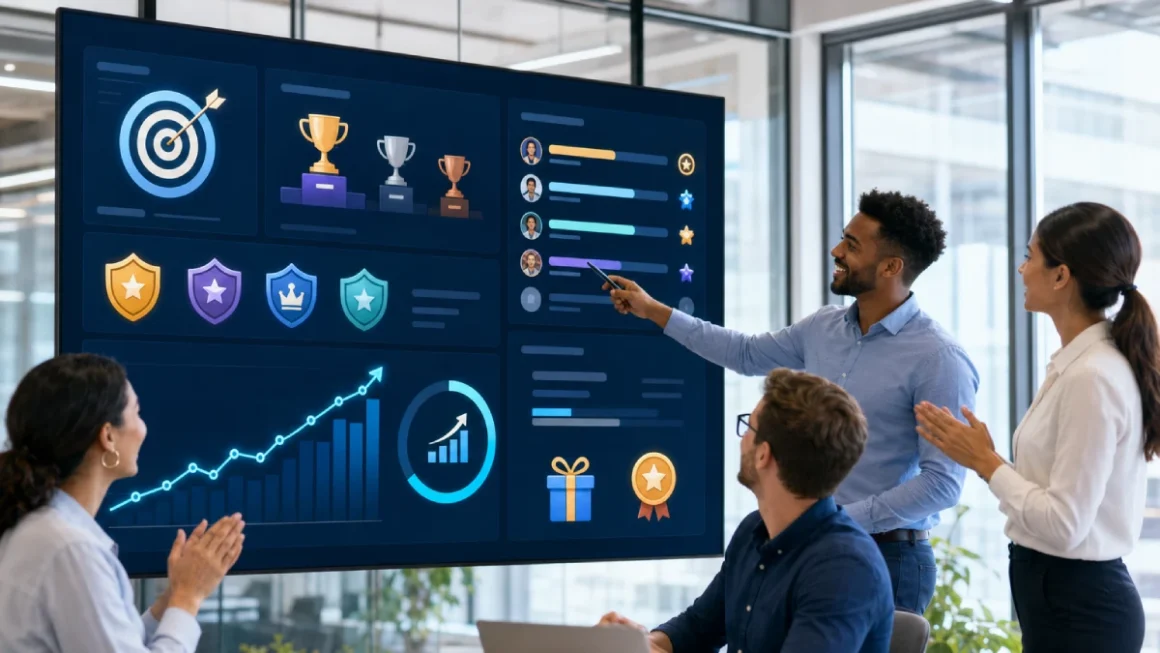
Indeed, healthy competition often leads to excellence. When sales teams engage in contests—whether through leaderboards, badges, or rewards—their motivation often reaches impressive levels. Research indicates that adding competitive elements can significantly ramp up productivity. Teams start pushing limits, encouraging each other to aim higher.
Sales professionals flourish in this energized environment, where objectives morph into friendly rivalries instead of mundane tasks.
“Competition isn’t just a drive; it’s the fuel that ignites top performance.”
While personal goals carry importance, there’s something about the thrill of clinching the top spot, which can be impossible to resist. Companies employing gamification tools have reported a surge in output by effectively weaving in competition. The entire team often spurs one another to surpass targets, fueled by a shared desire for improvement.
Strategies for Instilling a Game-Like Culture in Organizations
Instilling a game-like culture goes well beyond simply setting up leaderboards. Organizations must infuse their practices with game mechanics that truly resonate with their sales teams. So, how can leaders accomplish this? First, establishing clear and achievable goals is critical. Employees need a solid understanding of their targets, ideally featuring milestones to celebrate along the way.
- Implement regular team challenges to encourage collaboration.
- Promote peer recognition and constructive feedback.
- Craft rewarding experiences that recognize continuous progress.
It’s important to remember, the more engaged employees feel, the stronger their investment in their roles. By cultivating an atmosphere filled with enthusiasm and healthy competition, businesses can dramatically enhance productivity.
Your Metrics Matter: Tracking Performance in Real-Time
As business landscapes evolve, gaining timely insights into performance metrics isn’t just beneficial; it’s a business imperative. Gamification software provides organizations with the tools necessary to turn data into actionable insights. With live performance dashboards, managers can keep tabs on both team productivity and individual accomplishments.
Using Data to Create Winning Sales Strategies
Data-driven decision-making has emerged as a vital component in the development of successful sales strategies. By tracking key metrics, organizations can swiftly pivot to align with market needs. For sales teams, visibility into their standings makes recognizing trends almost second nature.
- Monitor individual sales performance against set targets.
- Analyze customer engagement metrics to refine methods.
- Adapt team strategies based on real-time feedback.
Crafting winning sales strategies relies heavily on both analytics and instincts. Gamification software can illuminate areas that might need improvement, allowing teams to refine their methods systematically and effectively.
Key Performance Indicators for Gamified Sales Success
Establishing Key Performance Indicators (KPIs) is essential for gauging the success of any gamification initiative. Leaders should select metrics that reflect both sales performance and the level of engagement among team members. Here are indispensable KPIs to contemplate:
- Revenue generated by each salesperson.
- Participation rates in gamification activities.
- Time taken to close deals.
These metrics offer valuable insights, informing future strategies aimed at maximizing productivity and engagement within sales teams. However, it’s not enough to merely measure; appropriate adjustments must follow based on the analyzed data.
Real-World Examples: Success Stories from Leading Companies
To grasp the undeniable power of gamification software, examining companies that have effectively integrated these solutions can offer profound insights. Business leaders frequently draw inspiration from peer successes. Take a look at how some organizations have navigated this journey:
How Industry Leaders Use Gamification to Boost Revenue
Industry leaders leverage gamification tools in innovative ways to enhance revenues. One global technology firm, for example, incorporated gamification into their sales training program. The outcome? A remarkable transformation, culminating in a 40% increase in sales within just six months. Their secret lies in creating interconnected goals that align individual contributions with broader corporate objectives.
Such organizations demonstrate how gamified solutions can elevate sales efforts to new heights. When teams feel both challenged and appreciated, they tend to surpass previous performance levels.
Case Studies: Transforming Sales Teams with Hoopla
Hoopla exemplifies excellence in this field, offering rich gamification tools that yield measurable performance insights. A well-known consumer goods company embraced Hoopla’s platform, leading to a surge in engagement rates. Their sales staff became more competitive, wonderfully balancing personal growth with team unity. This case showcases how the right gamification software can catalyze remarkable transformations.
Equipped with real-time data and engaging resources, teams can significantly alter their operational dynamics. This potent combination not only strengthens motivation but also enhances productivity and outcomes.
Best Practices for Implementing Gamification Software
An effective implementation strategy can mean the difference between lackluster and outstanding results with gamification. Professionals highlight several best practices, ensuring that integrating gamification software is as smooth as possible.
Creating Engaging Challenges that Drive Results
At the core of any gamification initiative lies the establishment of challenges. It’s all about designing experiences that inspire and engage. Tasks should be crafted to encourage teams while remaining attainable, with measurable outcomes. Here’s a quick overview of key elements to include:
- Set objectives tied directly to business goals.
- Encourage healthy rivalry among team members.
- Incorporate a blend of individual and team challenges to cater to diverse personalities.
By thoughtfully designing challenges, organizations can keep motivation levels high. Making success both accessible and challenging reinforces camaraderie within the team. Additionally, it has the potential to shift the focus from mere competition to collaborative efforts when crafted with thoughtfulness.
Tips for Training Teams on New Gamification Systems
Training emerges as a vital component during the rollout of gamification software. Employees need to understand how to utilize the tools effectively, as well as embrace this new culture. Here are some practical suggestions:
- Conduct comprehensive training sessions covering platform features.
- Incorporate hands-on workshops for practical experience.
- Establish a mentorship program for ongoing support.
Prioritizing training signals to employees that company leadership values their success. This approach fosters the acceptance of new systems, aligning individual ambitions with organizational goals.
Ultimately, introducing fresh methodologies has the potential to dramatically enhance performance across a company’s sales teams, paving the way for future triumphs.
FAQ
What types of industries can benefit from gamification software?
Nearly every industry with a sales component can gain from gamification software. From technology to retail, the ability to cultivate engaging metrics and competitions nurtures a vibrant sales culture, driving performance across various sectors.
How can gamification software improve employee retention rates?
By engaging employees through gamification, businesses can create a sense of community and ownership in their roles. When team members feel recognized and challenged, they’re less inclined to explore other opportunities, resulting in higher retention rates.
Are there any specific success metrics for remote sales teams using gamification?
Absolutely. Key metrics for remote sales teams often encompass participation rates in challenges, the quality of remote collaboration, and closed deals resulting from virtual engagement. Monitoring these metrics can help assess the effectiveness of gamification in a remote setup.
How often should gamification challenges be updated to maintain engagement?
Regularly refreshing gamification challenges is crucial; quarterly updates can keep the content lively and appealing. This approach prevents stagnation while ensuring that employees remain motivated and engaged in their tasks.
What role does feedback play in a gamification strategy?
Feedback is essential for continuous improvement. It enables team members to evaluate their performance, recognize growth areas, and celebrate achievements, creating a dynamic cycle of motivation and enhancement.
Can gamification be integrated with existing sales platforms?
Indeed! Many gamification tools are designed to integrate seamlessly with existing sales platforms. Organizations often discover that this combination enhances user experience and ensures an effortless transition for teams.
What are some common features to look for in gamification software?
Key features to consider include real-time performance tracking, customizable leaderboards, rewards systems, and user-friendly interfaces. These components significantly enhance the engagement of sales teams while optimizing performance metrics.
How do companies measure the return on investment (ROI) of gamification software?
Organizations assess ROI through increased sales numbers, heightened employee performance, and enhanced engagement levels. An insightful analysis links these results back to the implementation of gamification strategies, showcasing distinct financial benefits.